Friday, March 10, 2006

A Picture of Jimi Hendricks Was on His Wall


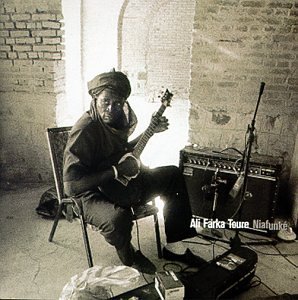
Ali Farka Toure is truly a hero of mine. I often continue my morning meditation after I quit sitting by dancing to the spiritual essence of his music. He became quite successful and toured for awhile, but said he had been severed from his roots by the music business demands. He moved back to his land, converted thousands of acres of arid land into farmable land and taught his community how to use the land to become self-sufficient. He also taught them of our spirit connection to the land and of the importance of standing up for our rights and the rights of nature to live in harmony with nature. I never knew him, I never saw him perform, but he made a connection with me through the love expressed in his music that cannot be described. I have tears in my eyes as I type this. I will miss my friend.


African music giant Farka Toure honored by Mali By Tiemoko Diallo
Wed Mar 8, 12:59 PM ET


Desert blues pioneer Ali Farka Toure, one of Africa's best-loved musicians, was posthumously awarded Mali's highest civil honor on Wednesday as a sandstorm delayed his funeral in his hometown on the edge of the Sahara.

The double Grammy-winning singer and guitarist, who died on Tuesday after a long fight with bone cancer, was made Commander of the National Order by Malian President Amadou Toumani Toure at a ceremony in Bamako attended by ministers and musicians.

"Farka is a monument of Malian music, Farka is the pride of Mali," Toumani Toure said.

Dubbed "the African John Lee Hooker," Farka Toure's haunting music, which he sang in 11 languages, combined the traditions of his native northern Mali with the influence of American blues, which he saw as having its roots in West Africa.

His body had been due to be flown to Niafunke, the town where he grew up on the barren shores of the slow-moving Niger river near the fabled trading town of Timbuktu.

But the landscape which inspired his music seemed to pay him a final homage as a desert wind blew clouds of orange sand and dust across the sky, grounding planes and forcing mourners to travel the 850 km (530 miles) in a cortege of jeeps.

"The whole of Mali woke up this morning to such strange weather and no visibility," said Toumani Diabate, a virtuoso of the kora -- a traditional West African harp -- who played alongside Farka Toure on his latest album.

"Ali was a man of God. Everyone is thinking the same thing. However you look at it, it's mystical."

RICE FARMER

One of the Africa's most internationally successful artists, Farka Toure won acclaim around the world for his 1994 album "Talking Timbuktu," recorded with Texan guitarist Ry Cooder, and won a second Grammy last month for "In the Heart of the Moon," made with his countryman Toumani Diabate.

He had just finished work on a new solo album when he died.

"It's a major loss for all of Africa because Ali proved that as an African, as a musician, we could take our work very, very far," Ivory Coast's Tiken Jah Fakoly, one of the continent's best-selling reggae stars, told Reuters in Bamako.

Though famous for his music, Farka Toure eschewed a life of glamour and thought of himself above all as a farmer, tending to a 350-hectare farm in Niafunke, where he was made mayor after setting up projects to help local women and children.

With few tarmac roads, his coffin -- draped in a Malian flag and carried in an aid agency jeep -- was not expected to reach Niafunke before nightfall meaning the burial would be delayed until Thursday, said family friend Diadie Sangare.

It was a journey that was well-known to Farka Toure, who was born in 1939 but like many Africans of his generation did not know his exact date of birth.

"For some people, Timbuktu is a place at the end of nowhere," he was quoted as saying in the liner notes to "Talking Timbuktu."

"But that's not true. I'm from Timbuktu and I can tell you that it's right in the center of the world."

(Additional reporting by Rainer Schwenzfeier in Bamako and Nick Tattersall in Dakar)


Copyright © 2006 Reuters Limited. All rights reserved. Republication or redistribution of Reuters content is expressly prohibited without the prior written consent of Reuters. Reuters shall not be liable for any errors or delays in the content, or for any actions taken in reliance thereon.

Wednesday, March 08, 2006

Turn On Your Love Light


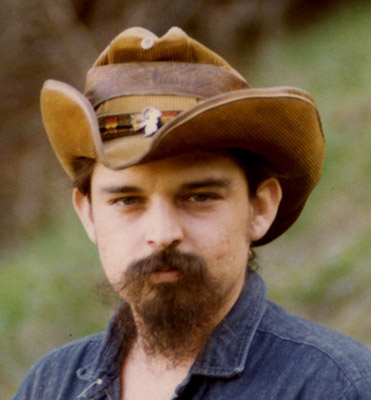
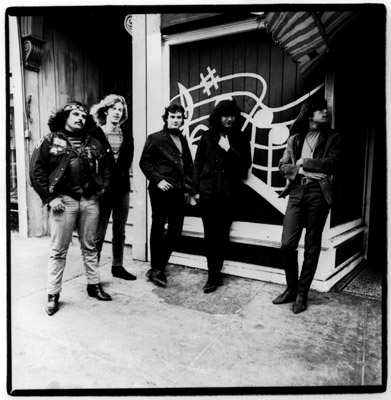
3/8/73 Pigpen dies in Corte Madera, CA at age 27

Cause of death was hepatic hemorrhage. Contributing factors were alcohol and Ehlers-Danlos Syndrome (EDS), a genetic connective-tissue disorder.

His grave marker at Alta Mesa Memorial in Palo Alto reads:
"Pigpen Was and Is Now Forever One of the Grateful Dead"


Pigpen is my brother in more ways than one. He came from a working class background, was a driving force in the formation and booking of the Grateful Dead. Jerry brought old timey roots, Phil brought classical and jazz and Pigpen brought rhythm and blues, soul and grit. To me he was the heart, Phil the head and Jerry the will.

One thing he and I share is our alcoholism. There are many more opportunities to get into recovery now than there was then. In addition, I believe recovery is especially challenging for the successful artist. Recovery for the alcoholic is dependent upon ego deflation. The alcohol and drug addictions make this difficult enough, having created an inflated ego based upon delusion and fear. The artist, and probably performers in particular are constantly being told how great they are. This adds fuel to the delusion driving the false sense of ego. The ego reaches such a state that one truly believes they are god, that the universe revolves around them. One can be quite successful on the earth plane with this mentality.

Meanwhile, the solvent alcohol, is dissolving everything. Dissolving the health of the mind, body and spirit. Dissolving relationships, jobs, self-esteem, freedom and eventually the organs. And that is what eventually happened to Pigpen. But his Spirit lives on. The gifts he gave us can still be heard. The influence lives in many musicians and listeners, for without Pigpen there probably would not have been a Grateful Dead. Now that is hard to imagine.

Ron McKernan Biography

1945 9/08 Ron McKernan is born in San Bruno, CA
1962 Pigpen meets Jerry on the San Mateo Peninsula coffeehouse circuit
~ Bill hears Jerry, Pigpen, & Hunter play at the Tangent in Palo Alto
1963 The Second Story Men formed
Zodiacs formed
1964 Mother McCree's Uptown Jug Champions formed
1965 4/?? Warlocks formed
5/05 Magoo's Pizza Parlor first paid Warlocks gig
11/06 Warlocks meet Bill Graham at a Family Dog benefit for the Mime Troupe
12/01 Acid Tests organizer Ken Kesey enlists Warlocks as house band
12/0? Grateful Dead founded in San Francisco
1971 8/26 Pigpen takes a break from touring for health reasons
12/01 Pigpen returns to touring
1972 5/26 Pigpen sings for the last time, in London
6/17 Pigpen leaves the band due to declining health
1973 3/08 Pigpen dies in Corte Madera, CA at age 27
1994 1/19 Rock and Roll Hall of Fame inducts the Grateful Dead


Peace and Health,

Alan

Wonder Drug Inspires Deep, Unwavering Love Of Pharmaceutical Companies


Satire from The Onion

March 6, 2006 | Issue 42•10

NEW YORK—The Food and Drug Administration today approved the sale of the drug PharmAmorin, a prescription tablet developed by Pfizer to treat chronic distrust of large prescription-drug manufacturers.

Pfizer executives characterized the FDA's approval as a "godsend" for sufferers of independent-thinking-related mental-health disorders.

"Many individuals today lack the deep, abiding affection for drug makers that is found in healthy people, such as myself," Pfizer CEO Hank McKinnell said. "These tragic disorders are reaching epidemic levels, and as a company dedicated to promoting the health, well-being, and long life of our company's public image, it was imperative that we did something to combat them."

Although many psychotropic drugs impart a generalized feeling of well-being, PharmAmorin is the first to induce and focus intense feelings of affection externally, toward for-profit drug makers. Pfizer representatives say that, if taken regularly, PharmAmorin can increase affection for and trust in its developers by as much as 96.5 percent.

"Out of a test group of 180, 172 study participants reported a dramatic rise in their passion for pharmaceutical companies," said Pfizer director of clinical research Suzanne Frost. "And 167 asked their doctors about a variety of prescription medications they had seen on TV."

Frost said a small percentage of test subjects showed an interest in becoming lobbyists for one of the top five pharmaceutical companies, and several browsed eBay for drug-company apparel.

PharmAmorin, available in 100-, 200-, and 400-mg tablets, is classified as a critical-thinking inhibitor, a family of drugs that holds great promise for the estimated 20 million Americans who suffer from Free-Thinking Disorder.

Pfizer will also promote PharmAmorin in an aggressive, $34.6 million print and televised ad campaign.

One TV ad, set to debut during next Sunday's 60 Minutes telecast, shows a woman relaxing in her living room and reading a newspaper headlined "Newest Drug Company Scandal Undermines Public Trust." The camera zooms into the tangled neural matter of her brain, revealing a sticky black substance and a purplish gas.

The narrator says, "She may show no symptoms, but in her brain, irrational fear and dislike of global pharmaceutical manufacturers is overwhelming her very peace of mind."

After a brief summary of PharmAmorin's benefits, the commercial concludes with the woman flying a kite across a sunny green meadow, the Pfizer headquarters gleaming in the background.

PharmAmorin is the first drug of its kind, but Pfizer will soon face competition from rival pharmaceutical giant Bristol-Myers Squibb. The company is developing its own pro-pharmaceutical-company medication, Brismysquibicin, which will induce warm feelings not just for drug corporations in general, but solely for Bristol-Myers Squibb.

"A PharmAmorin user could find himself gravitating toward the products of a GlaxoSmithKline or Eli Lilly," BMS spokesman Andrew Fike said. "This could seriously impede the patient's prescription-drug-market acceptance, or worse, Pfizer's profits in the long run."

"Brismysquibicin will be cheaper to produce and therefore far more affordable to those on fixed incomes," Fike added.

The news of an affordable skepticism-inhibitor was welcomed by New York physician Christine Blake-Mann, who runs a free clinic in Spanish Harlem.

"A lot of my patients are very leery of the medical establishment," Blake-Mann said. "This will help them feel better about it, and save money at the same time."

PharmAmorin's side effects include nausea, upset stomach, and ignoring the side effects of prescription drug medication.

© Copyright 2006, Onion, Inc. All rights reserved.The Onion is not intended for readers under 18 years of age.

Monday, March 06, 2006

Let's make March 8, International Women's Day, a time for flexing our collective muscle as women.


I'm Not a Woman but my feminine self is strong and growing stronger. We will never find Peace as a culture until Mother's are given the respect and empowerment neccesary for a Mother;s love and compassion to lead the way. Please support THE WOMEN'S CALL.


THE WOMEN'S CALL


Click here to sign the call now.

Women are mobilizing women around the globe to call for an end to the occupation and the violence in Iraq. With the majority of people in Iraq, the U.S., the U.K., and around the world opposing this war, now is the time for women to step forward and make our opposition more visible and vocal.

With the launch of Women Say No To War Campaign, we are asking women around the world to sign on to the Women’s Call for Peace. We hope to obtain a minimum of 100,000 signatures by International Women's Day on March 8, 2006, when US and Iraqi women will deliver these signatures to leaders in Washington DC and women around the world will deliver them to US embassies.

Women's Call for Peace: An Urgent Appeal

We, the women of the United States, Iraq and women worldwide, have had enough of the senseless war in Iraq and the cruel attacks on civilians around the world. We've buried too many of our loved ones. We've seen too many lives crippled forever by physical and mental wounds. We've watched in horror as our precious resources are poured into war while our families' basic needs of food, shelter, education and healthcare go unmet. We've had enough of living in constant fear of violence and seeing the growing cancer of hatred and intolerance seep into our homes and communities.

This is not the world we want for ourselves or our children. With fire in our bellies and love in our hearts, we women are rising up - across borders - to unite and demand an end to the bloodshed and the destruction.

We have seen how the foreign occupation of Iraq has fueled an armed movement against it, perpetuating an endless cycle of violence. We are convinced that it is time to shift from a military model to a conflict-resolution model that includes the following elements:

* The withdrawal of all foreign troops and foreign fighters from Iraq;

* Negotiations to reincorporate disenfranchised Iraqis into all aspects of Iraqi society;

* The full representation of women in the peacemaking process and a commitment to women's full equality in the post-war Iraq;

* A commitment to discard plans for any foreign bases in Iraq;

* Iraqi control of its oil and other resources;

* The nullification of privatization and deregulation laws imposed under occupation, allowing Iraqis to shape the trajectory of the post-war economy;

* A massive reconstruction effort that prioritizes Iraqi contractors, and draws upon financial resources of the countries responsible for the invasion and occupation of Iraq;

* Consideration of a temporary international peacekeeping force that is truly multilateral and is not composed of any troops from countries that participated in the occupation.


To move this peace process forward, we are creating a massive movement of women - crossing generations, races, ethnicities, religions, borders and political persuasions. Together, we will pressure our governments, the United Nations, the Arab League, Nobel Peace Prize winners, religious leaders and others in the international community to step forward to help negotiate a political settlement. And in this era of divisive fundamentalisms, we call upon world leaders to join us in spreading the fundamental values of love for the human family and for our precious planet.