Tuesday, January 31, 2006

By, For and Of The People


(Click on the Picture to Enlarge)


I thought it would be of service to present a "State of the Union" address that attempts to be real, honest and compassionate.

Gore Vidal Delivers State of the Union: "Let the Powers That Be Know There is Something Called We the People of the U.S. and all Sovereignty Rests in Us."

Tuesday, January 31st, 2006
http://www.democracynow.org/article.pl?sid=06/01/31/1532246

In advance of President Bush’s state of the union address later tonight, author Gore Vidal delivers his own traditional state of the union address. We hear Vidal speak about patriotism, the NSA domestic surveillance programs, corporate America, Presidential powers and more.

In Washington, President Bush will deliver the State of the Union address tonight. In advance of tonight we’d like to bring you a different take on the annual presidential speech.

Since the early 1970s, author and playwright Gore Vidal has been delivering his own State of the Union address. The tradition began on the David Susskind Show. We’re going to continue that tradition by hearing from Gore Vidal today.

* Gore Vidal, one of America’s most respected writers and thinkers. He’s authored more than twenty novels and five plays. His recent national bestsellers are "Dreaming War" and "Perpetual War for Perpetual Peace." His latest book is called "Imperial America: Reflections on the United States of Amnesia."


JUAN GONZALEZ: Here is Gore Vidal in an address he recorded for us on the State of the Union.

GORE VIDAL: Today, the 31st of January, in the hallowed year, election year, of ’06, could be a memorable day if we all do our part, which is simply to concentrate, among other things, and do perhaps what a couple of groups have decided would be useful for the President, I guess his State of the Union. We might give him some idea of our state, which is one of great dissatisfaction with him and his regime. And there's talk of perhaps demonstrating in front of the Capitol or here or there around the country to show that the union is occupied by people who happen to be patriots. And patriots do not like this government.

This is an unpatriotic government. This is a government that deals openly in illegalities, whether it is attacking a country which has done us no harm, two countries -- Iraq and Afghanistan -- because we now believe, not in declaring war through Congress as the Constitution requires, but through the President. ‘Well, I think there are some terrorists over there, and I think we got to bomb them, huh? We'll bomb them.’ Now, we’ve had idiots as presidents before. He's not unique. But he's certainly the most active idiot that we have ever had.

And now here we are planning new wars, ongoing wars in the Middle East. And so as he comes with his State of the Union, which he is going to justify eavesdropping without judicial warrants on anybody in the United States that he wants to listen in on. This is what we call dictatorship. Dictatorship. Dictatorship. And it is time that we objected. Don't say wait ‘til the next election and do it through that. We can't trust the elections, thanks to Diebold and S&S and all the electronic devices which are being flogged across the country to make sure that elections can be so rigged that the villains will stay in power.

I think demonstrations across the country could be very useful on this famous Tuesday. Just say no. We've had enough of you. Go home to Crawford. We'll help you raise the money for a library, and you won't even ever have to read a book. We're not cruel. We just want to get rid of you and let you be an ex-president with his own library, which you can fill up with friends of yours who can neither read nor write, but they'll be well served and well paid, we hope, by corporate America, which will love you forever.

So I think it is really up to us to give some resonance to the State of the Union, which will be largely babble. He's not going really try to do anything about Social Security, we read in the papers. He has no major moves, other than going on and on about the legality of his illegal warrantless eavesdroppings and other breakings of the law.

I had a piece on the internet some of you may have seen a few days ago, and there's a story about Tiberius, who’s one of my favorite Roman emperors. He's had a very bad press, because the wrong people perhaps have written history. But when he became emperor, the Senate of Rome sent him congratulations with the comment, “Any law that you want us to pass, we shall do so automatically.” And he sent a message back. He said, “This is outrageous! Suppose I go mad. Suppose I don't know what I'm doing. Suppose I'm dead and somebody is pretending to be me. Never do that! Never accept something like preemptive war,” which luckily the Senate did not propose preemptive wars against places they didn't like. But Mr. Bush has done that.

So this is a sort of Tiberius time without, basically, a good emperor, and he was a good emperor in the sense that he sent back this legislation, which was to confirm anything he wanted to have done automatically. And they sent it back to him again. And then he said, “How eager you are to be slaves,” and washed his hands of the Senate and went to live in Capri, a much wiser choice, just as we can send this kid back to Crawford, Texas, where he'll be very, very happy cutting bushes of the leafy variety.

You know, it’s at a time when people say, ‘Well, it makes no difference what we do, you know, if we march and we make speeches, and this and that.’ It makes a lot of difference if millions of Americans just say, “We are fed up! We don't like you. We don't like what you're doing to the country and what you have done to the country. We don't like to live in a lawless land, where the rule of law has just been bypassed and hacks are appointed to the federal bench, who will carry on and carry on and carry on all of the illegalities which are so desperately needed by our military-industrial corporate masters.”

I think a day dedicated to that and to just showing up here and there around the country will be a good thing to do. And so, let the powers that be know that back of them, there's something called "We the people of the United States,” and all sovereignty rests in us, not in the board rooms of the Republicans.

JUAN GONZALEZ: Author Gore Vidal delivering his traditional State of the Union address in advance of President Bush's State of the Union later tonight.

www.democracynow.org

Another Yippie Heading Home


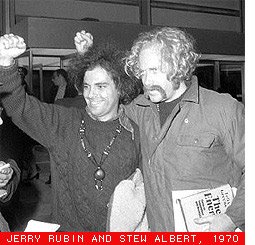
Stew Albert died, January 30, 2006 at 3:20 a.m, age 66. Peacefully, in his sleep, surrounded by Judy, Jessica and his many friends. Funeral services this Wednesday, Feb. 1 at Havurah Shalom in Portland.

Here is his last posting to his blog about 14 hours before he died from cancer:

"Day in the Life: Super crazy thing. The hospice nurse had to do more. Still me. Still me."

During the Viet Nam War I identified as a Yippie and participated in guerrilla theater in Athens, Ohio. When someone as important to the movement as Stew Albert passes on I have to pause and reflect on the gifts to humanity that he and many others gave through their dedication to justice. Rest in Peace Stew and may we meet and dance together in the next lifetime. I am grateful for your gifts.

Here is an article from the San Francisco Chronicle from October, 2004 interviewing Stew.


When politics met theater in the streets
- Heidi Benson
Sunday, October 10, 2004


"Rise up and abandon the creeping meatball!"

With this anti-establishment motto, and a handful of others, Jerry Rubin, Abbie Hoffman and a somewhat less well-known but no less central counterculture figure named Stew Albert founded the Youth International Party in 1967.

Serious political surrealists -- the Marx Brothers by way of Karl Marx -- the Yippies gained fame for attempting to levitate the Pentagon and for running a live pig for president, among other protests against the Vietnam War.

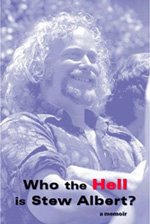
Albert has now written a page-turner of a memoir called "Who the Hell Is Stew Albert?" published this summer by Red Hen Press.

By his own definition, Albert was an "almost-nice Jewish boy who grew up in Brooklyn between World War II and the Cold War." But when he hopped a bus to San Francisco in 1964, trying to get over a broken heart, he met up with history.

At that moment, what would become a decade of social protest was just getting started at UC Berkeley. First came the Free Speech Movement, launched in 1964 to protest campus crackdowns on freedom of expression. Albert -- like thousands of other young people -- was attracted to the FSM's insistence that students had the same constitutional rights as adults.

The FSM opened the door for the Vietnam Day Committee, the Berkeley anti- war group that staged one of the nation's largest campus teach-ins about Vietnam in 1965. Albert soon became a leader of the committee.

By 1967, he had helped launch the Yippies, who married politics with guerrilla theater of the absurd.

"Our big contribution was our theatrical approach," Albert says by phone from his home in Portland, Ore. "When we wanted to satirize greed, we threw money at stockbrokers," which they did on the floor of the U.S. Stock Exchange. "When we wanted to satirize the election, we took a live pig and ran him for president. We tried to be inventive and creative in developing tactics, and we had the belief that if we did it right, we could change the world."

Reminiscing was the motive when he began his memoir in the late '70s on the encouragement of friends. Jerry Rubin had suggested that it was his turn to write a book: "By now, you can be very truthful and you don't have to apologize." Rubin told him, "Be honest."

The book is candid, written from the point of view of someone at the center of major protests that raised the hackles of law enforcement officials everywhere. (Albert was an unindicted co-conspirator in the alleged plot to disrupt the 1968 Democratic Convention in Chicago.)

He was intimately involved with some of the most flamboyant characters of the time -- including Eldridge Cleaver, Timothy Leary, Allen Ginsberg and William Burroughs -- often in rather mind-altering circumstances.

"I thought that the book would just be for my generation," Albert says, "and that it might be of some use to historians." But the direction of the book changed when he was swamped with e-mails from young people in response to his Web site (members.aol.com/stewa/stew.html).

"They knew a surprising amount about all of us and they wanted to exchange ideas," he says. "That made me think this book could also be of use to them."

So Albert put more stress on the dynamics of activism, what he calls "the how-to-do-it aspect."

"I wanted to give young activists a sense of how we organized things, how our creativity worked," he says, "and I've been getting very positive responses from young people who are reading the book."

His saw his first job as a kind of warts-and-all demystification. His generation didn't escape the ravages of drugs, for example, and those stories aren't left out.

"People today who are starting to organize tend to see what we did as beyond their own achievement, or from an era of mythology," he says. "I tried to portray us as human beings who did human things."

Today, Albert believes a new anti-war movement will continue to grow no matter who wins next month's presidential election.

"The opposition to the war in Iraq is much too large now to contain," he says. Such a movement "will have more influence over a Kerry administration than a Bush administration," he says.

"It will be like the effect of the civil rights movement, which pressured John F. Kennedy from the outside to do what, deep down, he knew was right."

With a bit of his old Yippie theatrical style, Albert says he's "shocked" that his book has been noticed.

"I've had a good response -- but I resent Clinton's memoir outselling mine," he says, then pauses.

"Who the hell is Bill Clinton?!"

E-mail Heidi Benson at hbenson@sfchronicle.com.

URL: http://sfgate.com/cgi-bin/article.cgi?file=/chronicle/archive/2004/10/10/RVG1H91FS11.DTL
©2006 San Francisco Chronicle

Monday, January 30, 2006

Does Any of This Look Familiar?


I found this at www.couplescompany.com along with much more insight into the nature of fascism and our current condition. I won't add my opinion just read it and think about it, except in the graphic I chose above..

The 14 Defining
Characteristics Of Fascism

by Dr. Lawrence Britt

Dr. Lawrence Britt has examined the fascist regimes of Hitler (Germany), Mussolini (Italy), Franco (Spain), Suharto (Indonesia) and several Latin American regimes. Britt found 14-defining characteristics common to each:

1. Powerful and Continuing Nationalism -
Fascist regimes tend to make constant use of patriotic mottos, slogans, symbols, songs, and other paraphernalia. Flags are seen everywhere, as are flag symbols on clothing and in public displays.

2. Disdain for the Recognition of Human Rights -
Because of fear of enemies and the need for security, the people in fascist regimes are persuaded that human rights can be ignored in certain cases because of "need." The people tend to look the other way or even approve of torture, summary executions, assassinations, long incarcerations of prisoners, etc.

3. Identification of Enemies/Scapegoats as a Unifying Cause -
The people are rallied into a unifying patriotic frenzy over the need to eliminate a perceived common threat or foe: racial , ethnic or religious minorities; liberals; communists; socialists, terrorists, etc.

4. Supremacy of the Military -
Even when there are widespread domestic problems, the military is given a disproportionate amount of government funding, and the domestic agenda is neglected. Soldiers and military service are glamorized.

5. Rampant Sexism -
The governments of fascist nations tend to be almost exclusively male-dominated. Under fascist regimes, traditional gender roles are made more rigid. Divorce, abortion and homosexuality are suppressed and the state is represented as the ultimate guardian of the family institution.

6. Controlled Mass Media -
Sometimes to media is directly controlled by the government, but in other cases, the media is indirectly controlled by government regulation, or sympathetic media spokespeople and executives. Censorship, especially in war time, is very common.

7. Obsession with National Security -
Fear is used as a motivational tool by the government over the masses.

8. Religion and Government are Intertwined -
Governments in fascist nations tend to use the most common religion in the nation as a tool to manipulate public opinion. Religious rhetoric and terminology is common from government leaders, even when the major tenets of the religion are diametrically opposed to the government's policies or actions.

9. Corporate Power is Protected -
The industrial and business aristocracy of a fascist nation often are the ones who put the government leaders into power, creating a mutually beneficial business/government relationship and power elite.

10. Labor Power is Suppressed -
Because the organizing power of labor is the only real threat to a fascist government, labor unions are either eliminated entirely, or are severely suppressed.

11. Disdain for Intellectuals and the Arts -
Fascist nations tend to promote and tolerate open hostility to higher education, and academia. It is not uncommon for professors and other academics to be censored or even arrested. Free expression in the arts and letters is openly attacked.

12. Obsession with Crime and Punishment -
Under fascist regimes, the police are given almost limitless power to enforce laws. The people are often willing to overlook police abuses and even forego civil liberties in the name of patriotism. There is often a national police force with virtually unlimited power in fascist nations.

13. Rampant Cronyism and Corruption -
Fascist regimes almost always are governed by groups of friends and associates who appoint each other to government positions and use governmental power and authority to protect their friends from accountability. It is not uncommon in fascist regimes for national resources and even treasures to be appropriated or even outright stolen by government leaders.

14. Fraudulent Elections -
Sometimes elections in fascist nations are a complete sham. Other times elections are manipulated by smear campaigns against or even assassination of opposition candidates, use of legislation to control voting numbers or political district boundaries, and manipulation of the media. Fascist nations also typically use their judiciaries to manipulate or control elections.

Wave Your Freak Flag High

There is a rebirth of Countercultural energy and interest going on as the same fascist forces grapple for control of the culture. Information about the movement can be found at the Hippie Museum website among other places. The following review is from the Hippie Museum Site:


A Happening - Bittersweet Adolescence of a Nation
( A review by Pam Hanna)

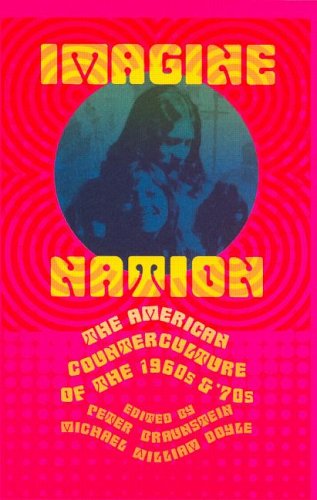
This book took me weeks to read, not because it was dull but because the copious footnotes at the end of each of the 14 excellent articles demanded investigation. The essays complement one another to present a more complete and cogent view of the antecedents and realities of the counterculture than any other volume I have yet seen on the subject. Counterculture names, say Braunstein and Doyle "…hippies, freaks, Flower Children, "urban guerillas" "orphans of Amerikka" – underscores the degree to which Sixties cultural radicals had a revolving-door approach to identity, appropriating and shedding roles and personas at a dizzying pace." In these pages the roles and personas in cultural politics, race, sex, the media (especially music, film and fashion), drugs, feminism, environmentalism and alternative visions of community and technology are thoroughly investigated.

"Unlike subcultures," says Marilyn Young in the foreword, "…a contraculture aspires to transform values and mores of its host culture. If it is successful…it BECOMES the dominant culture." I don’t believe anyone would maintain that the counterculture of the ‘60s has become dominant, but its influence on our present culture is more vast and all encompassing than much of the media would have us believe.

"The Sixties were centrally about the recognition on the part of an ever-growing number of Americans, that the country in which they thought they lived – peaceful, generous, honorable – did not exist and never had." The society they found themselves in was instead, "… morally bankrupt, racist, militaristic, and culturally stultifying." Against the climate of the Vietnam War and race riots in the South, these essays note that the era was one of post scarcity abundance. Intentional poverty was adopted consciously by a generation that was appalled by the waste of human and material resources. They wanted to figure out how to "…live a completely new life as far outside the boundaries of the State and commercial marketplace as they could get." Dropouts could live on the leftovers of this affluent society. The San Francisco Diggers’ motto was "create the condition you describe." Says Doyle, "For the Diggers the word "free" was as much an imperative as it was an adjective. They realized it with free housing, legal services, a medical clinic, film screenings, free [open] churches, and free stores with food, clothes, and household utensils – all donated and gathered from the surrounding community. The Mime Troupe and other street theater groups drew people in to create "happenings," freaking freely on the streets and public parks, de-legitimizing violence and racism, while the White Panthers staged a "total assault on the culture." Peacefully.

"If we make peaceful revolution impossible, we make violent revolution inevitable" said JFK and his words reverberate across cultural boundaries today. But hippies didn’t WANT to become the next coercive power structure in some kind of psychedelic fascism. They wanted a "free frame of reference."

Braunstein observes that the post-scarcity abundance or the era fueled a new drive toward leisure and play. Against a system of "lifelong competitiveness, materialism and avarice…LSD and other mind-expanding drugs incapacitated the discriminating faculties of the brain that placed objects and images in hierarchies of value." David Farber adds that LSD and other hallucinogens were used as "…an agent in the production of cultural reorientation...a new set of cultural coordinates." My only beef with the book is in Philip Deloria’s "Counterculture Indians and the New Age" and it’s not even a criticism of the essay (which I found among the most brilliant and absorbing) but of scholarly research in general. From personal knowledge, I know that there are egregious errors in what Deloria’s sources reported about New Buffalo and Lorian. Scholarly research breaks down when such sources are trusted, and Deloria gives an excellent example of this in the much-repeated death speech of Chief Seattle - who never uttered it. They were written by a white screenwriter from Texas for a 1972 TV script on pollution. Hippies and New Agers reinvented the Indian without careful reference to the source. And of course the image became marketable.

"Playing Indian," says Deloria, "…had a tendency to lead one into, rather than out of, contradiction and irony" and "…people are simultaneously granted a platform and rendered voiceless." In his excellent essay on communes, Timothy Miller notes that they were "…enormously, endlessly diverse." "The ultimate culprit, perhaps, was that sacred American icon, individualism. The time had come, communitarians believed, to give up the endless pursuit of self-interest and begin thinking about the common good. They wanted the country to start moving from "I" to "we." "It all added up to a vision of nothing less than a new society. The new communitarians were out to save the world and made no bones about it."

Miller’s essay segues nicely into the last in the book on alternative technology, environment and the counterculture by Andrew Kirk. Buckminster Fuller’s geodesic domes were used extensively in the Drop City commune in Colorado as well as "..composting toilets, affordable greenhouses, and organic gardening techniques along with alternative energy technologies." And don’t forget that the first computer hackers, Steve Jobs & Steve Wozniak, were longhairs who smoked grass. It’s not that there were no mistakes, ineptitude and downright stupidities in this deliberately unorganized "happening" of the ‘60s and ‘70s, but that what was good about it is still good. We’re still out there. Here. Hippies didn’t disappear and they didn’t become corporate CEOs either. Instead, nearly all became teachers, health care workers, artists, organic farmers, social workers and the like. "Cultural creatives" of the present, for instance, are either hippies of yesteryear or their heirs in some way.

"They are still out there, well into a third generation, coming together by the tens of thousands once a year at the Rainbow Gatherings. The hallucinogenic age, while tamed in some respects, has survived and mutated and reproduced." This is the closest thing to the whole story that I’ve seen yet. Put it on your reference book shelf.

Sunday, January 29, 2006

Counter Culture Timeline


Posted on The Hippie Museum website.


A brief history of the Counter Culture
by Phil Morningstar

1780

1780

1787 - Isaac T. Hopper, a Quaker, establishes a system to help fugitive slaves escape that becomes known as the Underground Railroad.

1789 - Declaration of The Rights of Man in Paris, France. 1790

1800

1810

1820

1824 - Society for the Prevention of Cruelty to Animals (SPCA) is formed in london England.

1830

1831 - Birth of the American abolition movement, when The Liberator, a weekly paper published by William. L. Garrison. After the end of the Civil War in 1865, Garrison published his last issue (1,820 consecutive issues) .

1836 - Ralph Waldo Emerson's first book, Nature, was the bible of a new movement, " a new consciousness," as he put it. The book begins by inviting the new generation to leave the past behind, to "enjoy an original relation to the universe It ends by exhorting the reader to "build your own world

1840

1841 - Brook Farm , founded in 1841 by George Ripley, began as a Trans-cendentalist attempt to integrate the life of the mind with manual labor. Nathaniel Hawthorne spent a year there shoveling manure and working the fields

1848 - The first women's rights convention is held in Seneca Falls, New York. A Declaration of Sentiments calls for equal treatment of women and men.

1850

1851 - Henry David Thoreau declares that "in Wildness is the preservation of the World." Walden published in 1854

1855 - Walt Whitman published, at his own expense, a volume of 12 poems, ,Leaves of Grass in 1855. It was criticized because of love , Whitman's exaltation of the body and sexuality and also because of its innovation in verse form. That is, the use of free verse in long rhythmical lines with a natural, "organic" structure.

1859 - Charles Darwin 's Origin of Species published.

1860

1864 - The First International Workingmen's Association is founded in London, September 23, 1864

1865 - 13th Amendment to the Constitution bans slavery in US.

1866 - The word "" ecology" is coined by the German biologist Ernst Haeckel

1866 - Animals The American Society for the Prevention of Cruelty to Animals was formed.

1867 - Karl Marx writes Das Kapital . First English translation was in 1887.

1869: Wyoming Territorial legislature grants full voting rights to women.

1871 - Paris Commune declared after Franco-Prussian War

1872 - Congress passes an act to establish , Yellowstone National Park Wyoming - the first in the history of the nation and of the world.

1880

1890: Wyoming enters the Union as the first state granting full women's suffrage which had been included in the original formation of the territory in 1869.

1890 - First uprising at Wounded Knee . Native Americans of the Lakota Nation are massacred at Wounded Knee S. Dakota.

1892 - In San Francisco, John Muir and a group of associates meet to found the Sierra Club

1893 - Colorado is the first state to adopt an amendment granting women the right to vote

1895 - Buddy Bolden is generally considered to be the first bandleader to play the improvised music, which later became known as jazz.

1900

1905 - The Industrial Workers of the World (IWW), also known as "the Wobblies used in-your-face tactics attempting to achieve their goals of unionizing all workers and overthrowing capitalism.

1907 - One of the first how-to books with a "back to the land" orientation was Three Acres And Liberty by Bolton Hall.

1908 - The International Vegetarian Union (IVU) formed.

1909 - Foundation of the National Association for the Advancement of Colored People.

1910

1913 - William Temple Hornaday publishes Our Vanishing Wild Life , one of the first books wholly devoted to endangered wild animals.

1914 - "Father of the blues" William Christopher Handy publishes his most famous composition, "St. Louis Blues."

1915 - Liberty Hyde Bailey publishes The Holy Earth, establishing an ethic for the human/nature relationship. It directly influences 'Aldo Leopold s "land ethic" in the 1930s and '40s

1916 - Margaret Sanger opens the first U.S. birth-control clinic in Brooklyn, N.Y.

1917 - 'Emma Goldman' s criticism of mandatory conscription of young men into the military led to a two-year imprisonment, followed by her deportation in 1919.

1920

1920 - The 19th Amendment to the Constitution grants women the right to vote.

1920 - Trained as a doctor, William Carlos Williams maintained a medical practice throughout his life, while also writing poetry that would influence a generation of younger poets, especially , Alan Ginsberg. His first major work, Kora in Hell: Improvisations was published in 1920.

1923 -Three years after women won the right to vote, the Equal Rights Amendment (ERA) is introduced in Congress by Senator Curtis and Representative Anthony. It is authored by Alice Paul, head of the National Women's Party, who led the suffrage campaign. Anthony is the nephew of suffragist Susan B. Anthony .

1924 - French poet and critic Surrealist Andre Breton published his Manifesto in Paris in 1924

1930

1931 -1939 - The Dust Bowl , an ecological and human disaster that took place in the southwestern Great Plains region of the United States.

1933 - Francis Perkins becomes the Secretary of Labor and the first woman named to a Cabinet position.

1938 - LSD-25 first synthesized by Albert Hoffman at Sandoz Labs, Bazel Switzerland

1940

1941 - Lester Young turned writer , Jack Kerouac the founding father of the "beat generation" on to his first marijuana cigarette. Jack was 19 years old.

1941 - Woody Guthrie joined the Almanac Singers, whose other members were Pete Seeger , Lee Hays , and Millard Lampell

1942 - Congress of Racial Equality founded in Chicago.

1944 - Vegan Society formed in U.K. to promote vegetarianism and animal rights.

1948 - Political satirist Lenny Bruce appears on the Arthur Godfrey Talent Scouts television show.

1948 - The first Fellowship of Intentional Communities is formed to promote altenative living situations.

1949 - George Orwell's Nineteen Eight-Four is published

1950

1951 - Cleveland disc jockey Alan Freed uses term "rock 'n' roll" to promote rhythm and blues to white audiences

1954 - Aldous Huxley's book The Doors of Perception published

1954 - Thurgood Marshall represented the NAACP in the Brown vs. Board of Education case.

1954 - Publication of Witchcraft Today gives rise to modern Wicca movement.

1955 - The U.S. Supreme Court declares that public schools must be desegregated "with all deliberate speed."

1955 - Bill Haley and the Comets become first major white band to use black rock 'n' roll forms, featuring heavy, danceable beat and repetitive patterns, "Rock Around the Clock" becomes huge hit.

1955 - Mrs. Rosa Parks an African-American seamstress, was arrested in Montgomery, Alabama for not letting a white bus rider take her seat.

1958 - Paul Krassner begins publication of The Realist, an underground satirical radical magazine.

1960

1960 - The American Vegan Society is formed.

1961 - the Congress of Racial Equality (CORE) began the freedom rides to end segregation on buses.

1961 - Amnesty International founded to protect the rights of political prisnors.

1962, Sept. 30--The first convention of Cesar Chavez's National Farm Workers Association (NFWA) is convened in Fresno, Calif.

1963 - . On August 28, 1963, 250,000 men, women, and children assembled on the grounds of the Lincoln Memorial. And the world was blessed to hear the famous "I have a Dream" speech given by Dr. Martin Luther King jr

1963 - Presiden John F. Kennedy is assinated in Dallas Texas Nov. 22.

1963 - Tolstoy Farm becomes the prototype, back to the land, "hippie" commune, with few rules and and open membership.

1964- Drop City commune/artists colony founded in Trinidad, Colorado.

1964 - Mario Savio gets up on a police car at Spoul Plaza at the UC campus in Berkeley, Ca. and sparks the Free Speech Movement.

1964 - The U.S. creates the Gulf of Tonkin incident as an excuse to escalate the war in Vietnam.

1964- Tim Leary writes The Psychedelic Experience

1964 - Ken Kesey and the Merry Pranksters began traveling around the country in a school bus painted psychedelic colors giving "Acid Tests. " Introducing people to the LSD experience.

1966 Spring-summer --A boycott of the struck DiGiorgio Fruit Corp. forces the giant grape grower to agree to an election among its workers. The company brings in the Teamsters Union to oppose Cesar's NFWA. The NFWA and the Filipino American AWOC merge to form the United Farm Workers and the union affiliates with the AFL-CIO, the national labor federation. DiGiorgio workers vote for the UFW

1966 - National Organization of Women NOW was established on June 30, 1966 in Washington, D.C.

1966 - The Supreme Court ruled that cities must begin to desegregate the schools immediately. In 1971, they approved busing as the primary method of integrating the schools

1966 - in the wake of the assassination of black leader Malcolm X and on the heels of the massive black, urban uprising in Watts, California. Huey P. Newton gathered a few of his longtime friends, including Bobby Seale and David Hilliard, and formed the Black Panther Party for Self Defense.

1966 - Lou Gottlieb declares his "Morning Star Ranch" Land, access to which is denied no one." And starts a legal battle with local authorities to keep Morning Star open land eventually deeding the land to God.

1966 - Mark Lane writes Rush to Judgement suggesting there was a conspiracy to assasinate president Kennedy.

1966 - October 30, -Acid Test Graduation

1967 - Ed Sanders and Tuli Kupferberg of The Fugs, and some SF Diggers lead a mass crowd in the .Excorsism of the Pentagon

1967 - The Summer of Love!!!

1968 - Martin Luther King jr assasinated in memphis, Tenn., on April 4.

1968 - Robert Kennedy assasinated in Los Angeles, Ca., on June 4.

1968 - American Indian Movement starts foot patrol in Minneapolis in response to growing police violence.

1968 - Durring demonstartions at the Democratic National Convention several organizers are indicted and become known as the Chicago 7.

1969 - First Earth Day celebration.

1969 - Woodstock Festival in upper N.Y. draws 500,000 people. Along with 3 days of music, Wavy Gravy and the Hog Farm create an atmosphere of love that transcends the crowd. Woodstock Nation declared.

1969- The Stonewall riots in NYC lead to the birth of the modern Gay Lesbian Bi Transgender movement.

1969 - The people of Berkeley, Ca. take an unused lot from UC and create People's Park.

1970

1970- May 4 , Kent State Massacre occurred when the Ohio National Guard opened fire durring an anti-war demonstration killing 4 students.

1970 - National Organization for the Reform of Marijuana Laws (NORML) formed.

1971 - The ERA is approved without amendments by the U.S. House of Representatives in a vote of 354-24

1971- Greenpeace began in 1971, when a small but determined group of activists boarded an aging 80-foot boat, slowly making their way through the cold North Pacific waters off Alaska. Their mission was to "bear witness" to the destructive nuclear weapons testing planned for Amchitka island. Little did they know they had just created what was to become the largest environmental movement in the world.

1971 - Ralph Nader founds the consumer protection group, .Public Citizen

1971 - , Stephen Gaskin and friends, found a large experiment in communal living calleda The Farm in Tennessee.

1972 - The Rainbow Family of Living Light holds the first Gathering of the Tribes at Strawberry Lake Colorado.

1972 - March 22: The Equal Rights Amendment is approved by the full Senate without changes - 84-8.

1973 - Second uprising at Wounded Knee S. Dak. occurs over harsh reservation conditions and broken treaties.

1973 - Bill Wheeler and the Ahimsa Church Ranch commune (Wheeler's Ranch)lose a decision in Appellate Court that spells the end of the open land movement. Bulldozers are used to destroy the homes.

1975 - Covenant of the Goddess is formed to help secure Pagan rights.

1979 - Earth First! was founded in 1979 in response to a lethargic, compromising, and increasingly corporate environmental community.

1980

1980 - Food Not Bombs is formed as a grassroots movement to feed the poor.

1980 - Reclaiming - a Community of people, a Tradition of Witchcraft and a religious organization. Reclaiming is a community of women and men working to unify spirit and politics. Our vision is rooted in the religion and magic of the Goddess - the Immanent Life Force

1980 - People for the Ethical Treatment of Animals (PETA) is formed on the simple principle that animals are not ours to eat, wear, experiment on, or use for entertainment.

1982 - June 30: ERA is stopped three states short of ratification. ERA supporters pledge "We'll Remember in November." An analysis of the ERA vote in the four key targeted states, Florida, Illinois, North Carolina and Oklahoma, shows the Republicans deserted ERA and Democratic support was not strong enough to pass the amendment; the analysis makes clear that the single most obvious problem was the gender and racial imbalance in the legislatures, with more than 2/3 of the women, all of the African Americans but less than 50% of the white men in the targeted legislatures casting pro-ERA votes in 1982. July: ERA is officially reintroduced in the United States Congress.

1986 - The second Fellowship of Intentional Communities is formed to provide a forum and resource information on alternative living situations.

1987 - Act Up formed as a direct action AIDS awareness/activist group.

1990

1995 - Dead Heads around the world mourn the passing of "Captain Trips", Jerry Garcia The other Grateful Dead band members carry on in new dead incarnations. Long live the Dead!

1996 - Proposition 215 is passed legalizing the medical use of cannabis in the state of California.

1996 - Kate Bornstein writes. Gender Outlaw

2000 - Y2K .... not

2001 - November 10, Ken Kesey died. (see Kesey Timeline by Rick Dodgson )

The Timeline is a work in progress. To volunteer to help, email hippiemuseum@imaginationwebsites.com